Behind the Closing Table With Lloyd Hartman Trimble: 25 Years of Real Estate and the Lessons That Stick
A Career That Started by Selling His Parents' House in High School
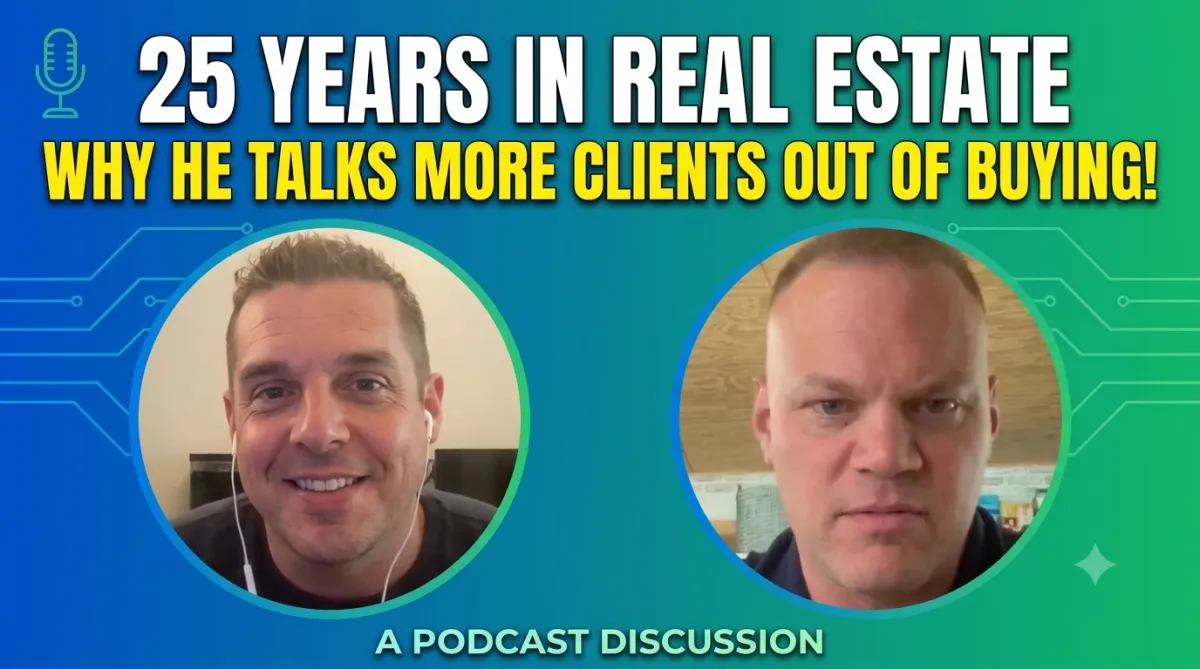
Matt Brady sat down with Lloyd Hartman Trimble of Carolina Homes Connection for a Behind the Closing Table conversation that covered more than twenty years of real estate experience, the philosophy that makes Lloyd willing to talk clients out of buying a home, and the deeply personal story behind why he wants everyone to own something.
Lloyd has been practicing real estate since 1999 and in the Carolinas since 2005. He grew up in Pennsylvania where his entry into the industry came at seventeen years old when he helped facilitate the sale of his parents' home and discovered that real estate was something he understood intuitively. The career that followed took him through Virginia, into Charlotte by way of a conversation with a mortgage broker at the restaurant where he was bartending, through Keller Williams, through co-founding RW Price and Associates in Monroe, and eventually to Carolina Homes Connection where he has been for the past six years.
He drives 40,000 to 50,000 miles a year. He has done it on a red motorcycle. He knows the builders and floor plans of communities he has sold in for decades.
What Makes Lloyd Different
Lloyd's answer to the question of what makes him different is the most unusual one you will hear from a producing real estate agent. He told a client this week to not buy any of the three homes they looked at together. His wife later told him that is exactly why they call Lloyd every time. He has talked them out of buying more houses than he has talked them into buying.
That is not an accident and it is not modesty. It is the operating philosophy. Anyone can sell a house. Not everyone should buy what they are currently looking at. A willingness to forego a commission in a client's best interest is what produces the trust that keeps clients coming back for every subsequent transaction and referring everyone they know.
The Misconception That Follows Real Estate Agents Everywhere
Lloyd's take on what people misunderstand about being a real estate agent is the same one that experienced agents consistently share. People think it is easy. The Phil Dunphy version of real estate where you do a couple of hours of work while juggling the rest of a full life. It can happen that way. Successful agents almost never operate that way.
Lloyd was at his computer until 11:30 the night before this recording and was responding to email by 5:30 the following morning. That is a typical day. The glamour on social media and the closing photos with happy clients represent the visible fraction of the work. What the camera never captures is everything that happened between contract and close to make that moment possible.
The Mistakes That Show Up Over and Over
On the buyer side Lloyd sees the same pattern repeatedly. In a market that has shifted toward more buyer leverage some buyers interpret that shift as an invitation to negotiate aggressively regardless of how a specific home is priced. He is currently in a negotiation where the seller already priced $50,000 below the closest comparable because of known condition items. The buyer does not feel like they are getting a deal even though the price already reflects the discount they would have negotiated for. They are close but not there yet.
Matt reinforced this with the payment reframe he uses with his own clients. Every $10,000 in purchase price difference equals roughly $65 to $70 per month in payment. Buyers who are agonizing over a $20,000 gap are often actually agonizing over $130 per month. When the conversation shifts to that number the decision frequently becomes easier to make.
On the listing side Lloyd's version of the same lesson is that sellers consistently overvalue their improvements. The patio furniture set purchased in uptown Charlotte has value to the seller and next to none to the buyer. In-ground pools and lakefront docks are the same category. Price them into the asking price too aggressively and buyers will simply decline to include them rather than pay for them.
The Renovation Conversation Sellers Need to Hear
Kitchens and bathrooms produce returns when done correctly. But Lloyd adds a nuance that matters. Do not put new countertops on twenty-year-old builder-grade cabinets. The new countertops will make the cabinets look worse by comparison than they did before. Either leave the kitchen clean and priced accordingly for the buyer to renovate to their taste or do the whole kitchen economically using remnant countertops to control cost without going to the cheapest option available.
He also flagged the pattern of freshly repainted homes that still have popcorn ceilings and outdated cabinets with brand new quartz countertops sitting on top of them. The quartz makes the old everything else look worse. Cohesion matters. Listen to your agent before you spend money on pre-listing improvements because not every dollar spent comes back and some spending actively works against you.
Behind the Scenes on Deals That Almost Fell Apart
Lloyd's answer to which deal almost fell apart was genuine laughter followed by the observation that something late and unexpected happens in almost every transaction. He has bought a refrigerator in the middle of the night because a seller took one they were not supposed to. He has navigated situations where sellers wanted to limit their total concessions to a number that could not simultaneously satisfy both the lender's requirements and the inspector's findings. He has ordered an engineer's report on a manufactured home at his own initiative because it was a lender requirement rather than a county requirement and making it happen was the easiest path to closing for everyone involved.
The through line is flexibility and the willingness to absorb whatever needs to be absorbed to produce the outcome the client needs. A good agent bridges the gap when something dumb comes up at the last minute. That is a significant portion of what they are actually being paid to do.
What to Ask When Interviewing an Agent
Lloyd's answer here is one of the sharpest in the conversation. Watch how an agent negotiates with you. That is the first test of how they will negotiate on your behalf in the transaction. An agent who agrees to everything you ask for either is not being asked for much or does not value themselves adequately. An agent who does not value themselves cannot be expected to effectively advocate for the value of what you are buying or selling.
For sellers he emphasizes proximity and local knowledge. An agent who has sold close to a thousand homes in a specific area over twenty years knows the streets, the builders, the floor plans, and the micro-market dynamics in a way that cannot be manufactured. But an agent who never leaves their immediate neighborhood should be listing in that neighborhood rather than in a market they do not know.
He also noted that there are roughly 80,000 agents in the Carolinas and perhaps 30,000 who are actually doing the work consistently. The majority have done zero to four transactions in the past year. Asking an agent what they have actually done in the last twelve months in the specific area you care about is the most direct way to find out whether you are talking to one of the 30,000 or one of the 50,000.
North Carolina Versus South Carolina: The Full Picture
Lloyd covers both states and his comparison is detailed in ways that most agents do not go into. The real estate laws, forms, and negotiation frameworks are genuinely different between the two states. The due diligence and contract structures operate differently. Anyone working across the state line needs to actually understand both rather than applying one state's practices to the other.
On taxes the comparison is nuanced. North Carolina has lower vehicle taxes and lower car insurance. South Carolina has significantly better real estate taxes for owner-occupants but substantially higher taxes for investment properties which can run three times the owner-occupant rate. The result is that South Carolina is generally favorable for primary residents on housing costs but challenging for investors while North Carolina is more favorable for rental investment.
Home prices in South Carolina tend to be more favorable overall which combined with the owner-occupant tax advantage creates monthly affordability that can balance out well. Schools are a category he recommends visiting in person rather than relying on rankings because class size and teacher engagement do not always align with where a school lands on a published list.
What He Would Tell Someone Moving to the Carolinas
His husband's framing is the one he finds most useful. The Charlotte metro area is roughly the same square mileage as New York City but a fraction of the density. People who say it feels overpopulated or crowded are looking at a city that has enormous room to grow by comparison. The standard selling points apply and Lloyd is genuine about all of them. Mountains two hours away. Beach two hours away. A major airport within reach. Charlotte and Columbia for urban activity. Lakes. Carowinds. Professional sports. Two cities in proximity.
The practical daily consideration he adds is grocery store proximity. He can drive 45 minutes to Indian Trail once a week without complaint. He does need a grocery store available nearby. Most buyers do and that daily geography matters more than any headline metric about a neighborhood or market.
The Broader Argument for Buying
Lloyd owns rental properties. He is honest about it and honest about the fact that his tenants are paying his mortgages. But he actively offers to help his tenants find homes to buy even knowing he will lose them as renters. He wants them to build equity. He wants them to own something.
The housing shortage is real even when inventory appears elevated. There are more people who should own homes than there are homes available to be owned. Down payment assistance and grant programs exist for first-time buyers that make ownership accessible at monthly costs below what rental markets in the same areas are charging. A house with a longer commute that carries a payment of $2,000 per month is a better financial decision than a rental at $2,800 in many markets.
The net worth of a homeowner compared to a renter runs approximately 40 times higher according to available data. That gap compounds through the forced savings mechanism of equity building over time. Lloyd bought his first house at 18 and had a roommate cover the mortgage while he lived there. When he sold he bought bigger. He describes those years as having essentially no housing expense. The first house does not need to be the dream house. It needs to be the asset that funds the next one.
The Personal Story Behind the Philosophy
Lloyd is gay and spent years working through how to reconcile his faith with his identity. He is direct about it and direct about the peace he has found. His faith community is central to his life in ways that go well beyond Sunday attendance. He sings in the praise band, serves communion, coordinates worship, and is actively exploring the call to preaching after years of guest preaching that have felt increasingly clear and encouraging.
A few weeks before this recording he went on a mission trip into the North Carolina mountains where his church provided access projects helping people get in and out of their homes more safely. The parallel to his daily work is not lost on him. He is in the business of helping people access homes in more ways than one.
He has a degree in religion that he set aside when he could not see a clear path for it coming out of school. He now sees the path clearly. The years spent navigating something difficult prepared him for the kind of service he is doing now and the kind he wants to do more of.
If he were not in real estate he would be a pastor. His sister is ordained. The words come easily when he preaches. He is planning for that to be part of his future.
How to Reach Lloyd Hartman Trimble
Call or text Lloyd at 704-345-3323. Leave a voicemail. Send a text. If you send a text and do not hear back send another one. Email him at [email protected]. His phone does not ring between 10 PM and 6 AM because otherwise it would.
Matt Brady at Success Lending is the mortgage partner behind every deal. Behind the Closing Table continues with more conversations from the people making real estate happen across the Carolinas and beyond.
Sources
NorthCarolinaRealtors.com
NAR.realtor
MortgageNewsDaily.com
CarolinaHomesConnection.com
Investopedia.com
